
Why Managing I/C Cores Gets Harder as Your Business Grows
You probably don’t think about your key system very often.
That’s usually the point.
The door locks. The key opens it. Everyone moves on with their day.
Until someone loses a key.
Or an employee leaves.
Or a manager changes locations.
Or a contractor needs access after hours.
Or nobody can remember who still has a copy of what.
That’s when a simple mechanical system starts creating a surprising amount of work.
And for many businesses, the problem isn’t that their locks stopped working.
The problem is that the way they manage access hasn’t changed even though the business has.
I/C Cores Solved a Real Problem
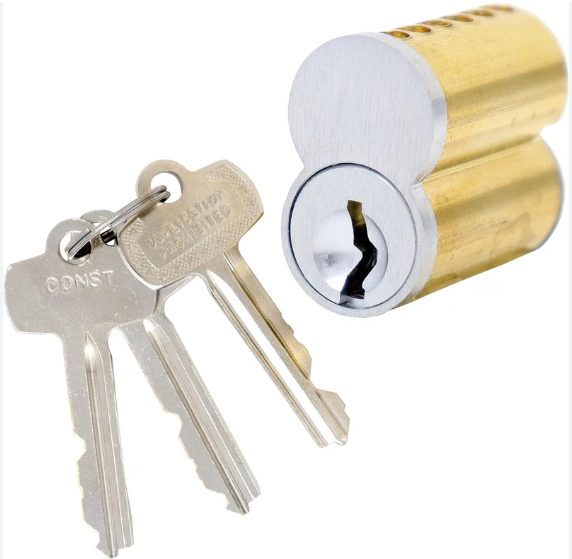
Interchangeable core locks became popular because they made rekeying easier.
Instead of replacing an entire lock, someone with the proper control key could remove the core and replace it.
For a long time, that was a smart way to manage changing access.
Lost key?
Change the core.
Employee leaves?
Change the core.
The system worked.
And it still does what it was designed to do.
But most businesses today are asking their access system to do much more than it did 20 or 30 years ago.
They want to manage multiple locations.
They want to know who came through the door.
They want to change access without sending someone to the building.
They want contractors to have access for three hours, not forever.
They want to remove access the moment an employee leaves.
That’s where the limitations of a physical key system start to show.
The Real Cost of a Lost Key Isn’t the Key
Think about what happens when an employee tells you they lost their key.
The key itself may have cost a few dollars.
That’s not really the problem.
The problem is what you don’t know.
Where is it?
Who might have it?
Was it labeled?
Could someone connect it to your business?
Now you have to decide whether the risk is serious enough to rekey the door.
That decision has a cost.
A new core needs to be installed.
Keys have to be distributed.
And suddenly a $5 piece of metal has created a much larger operational problem.
This is one of the hidden weaknesses of physical key systems.
They’re inexpensive when nothing changes.
Businesses change constantly.
Most Key Problems Are Really People Problems
Keys don’t usually fail.
People change.
Employees get promoted.
Managers leave.
Vendors rotate.
Cleaning companies change staff.
Contractors come and go.
Someone forgets to return a key.
Someone gives their key to someone else “just for tonight.”
Someone makes a copy because it’s easier than asking for another one.
None of this is unusual.
It’s just how businesses operate.
But a physical key has no idea who is holding it.
Once you hand someone a key, the lock recognizes the key.
It doesn’t recognize the person.
That distinction matters.
A Mechanical Lock Knows the Key Worked. That’s About It.
Imagine you arrive Monday morning and notice something is wrong.
Maybe equipment was moved.
Maybe inventory is missing.
Your minds jumps to, someone entered the building when they shouldn’t have.
Five employees have keys.
Who opened the door?
With a traditional mechanical key system, you may never know.
The lock did exactly what it was supposed to do.
The correct key went in.
The door opened.
There’s no record attached to that event.
No name.
No timestamp.
No access history.
That wasn’t a major limitation when the only job of a lock was to keep people without a key outside.
Today, many businesses need more visibility.
They don’t just want to know whether a door is locked.
They want to know who is using it.
This Is Where Access Control Starts to Look Different
Digital access changes one basic idea.
Instead of giving someone a physical object that opens the door, you give a person permission to open the door.
That permission can be changed.
It can have a schedule.
It can expire.
It can be removed.
And all activity is recorded.
That changes the way you think about access.
Consider a cleaning company that comes every Tuesday and Thursday between 7:00 and 10:00 PM.
With a physical key, the cleaner has access Monday morning, Saturday night, Christmas Day, and every other hour of the year.
The key doesn’t know their schedule.
It only knows whether it fits the lock.
With digital access, the permission can match the actual job.
Tuesday and Thursday.
7:00 to 10:00.
That’s it.
You’re no longer managing keys.
You’re managing access.
Employee Turnover Shows the Difference Fast
Employee turnover is another place where the difference becomes clear.
With physical keys, offboarding often depends on the employee returning the key.
That sounds simple.
Sometimes it is.
Sometimes nobody remembers to ask.
Sometimes nobody knows whether they made a copy.
And sometimes the company rekeys the door just to remove the uncertainty.
With digital access, the offboarding process looks very different.
The employee leaves.
Their access gets removed.
Done.
There’s nothing to collect.
Nothing to copy.
Nothing to wonder about later.
That’s not really a lock feature.
It’s a management feature.
Rekeying Becomes a Software Decision
This may be the biggest mental shift.
For most of the history of commercial locks, changing who could enter a building meant rekeying the door and handing out new keys.
Someone had to touch the door.
Digital access separates the permission from the hardware.
Need to remove one employee?
Remove their digital key.
Need to give a contractor access for the afternoon?
Send them access.
Need to change permissions at another location?
Do it remotely.
You’re not changing the lock every time the people around the lock change.
That matters more as the number of employees, vendors, doors, and locations grows.
Growth Makes Key Management Harder
A single office with five employees can manage physical keys pretty easily.
Now imagine 25 employees.
Then 75.
Then three locations.
Then eight.
Add cleaning companies, delivery teams, vendors, contractors, maintenance staff, managers, and temporary employees.
The number of keys grows.
The number of handoffs grows.
The number of unknowns grows.
That’s why businesses often don’t notice a problem with their key system until they grow.
Nothing suddenly broke.
The old process just stopped scaling.
What worked when everyone knew everyone becomes difficult when the company gets bigger.
Remote Access Solves Problems You Used to Accept
There’s another experience most business owners know.
Someone calls.
“I’m at the building and I forgot my key at home.”
Now somebody has to solve it.
Maybe a manager drives over.
Maybe another employee brings a key.
Maybe everyone waits, even your customers.
It feels normal because that’s how access problems have always been handled.
Digital access changes the expectation.
No driving across town.
No hiding a spare key.
No telling someone where the lockbox code is.
The interesting part is how quickly this stops feeling like a luxury.
Once you can manage a door remotely, sending someone across town with a key starts to feel strange.
The Question Isn’t Whether I/C Cores Work
They do.
That’s not really the debate.
The better question is whether a system built around physical keys still matches the way your business operates.
If your team rarely changes, everyone works the same hours, you have one location, and you don’t need records of who entered, a mechanical system may do exactly what you need.
But if you’re constantly:
Handing out keys
Tracking down former employees
Rekeying doors
Managing vendors and contractors
Sending people to unlock buildings
Wondering who entered a space
Managing access across several locations
You may not have a lock problem.
You may have an access management problem.
That’s an important distinction.
Because replacing one lock with another lock doesn’t fix the process around it.
Nexkey Moves Access From the Key to the Person
Nexkey replaces physical keys with digital access that can be managed on your phone from anywhere.
You can:
Send digital keys in seconds
Remove access without collecting a key
Create schedules for different users
See an audit trail of door activity
Unlock doors remotely
Receive alerts for unusual activity
The goal isn’t to make a lock more complicated.
It’s to make managing access simpler.
Because the hardest part of managing a door was never the door.
It was everything that happened after you handed someone the key.
If your business is still managing access with I/C cores and physical keys, it may be worth asking a simple question:
Are you managing the lock, or are you managing all the problems the key creates?
Learn more about how Nexkey replaces traditional key management at https://www.nexkey.com/security-evaluation.